
Low-Wage Workers Saw 28% Wage Growth in Last Decade, Far Exceeding Higher Wage Workers
From 2014-2024, workers at the lowest percentile (10th) experienced 28% growth after inflation, and workers at the 25th percentile saw 26% growth – essentially 2.5 times the growth seen by higher wage workers (median or higher).
This data shows a stark reversal from the previous 10 years, when wage growth was inverted – higher growth for higher wage workers.
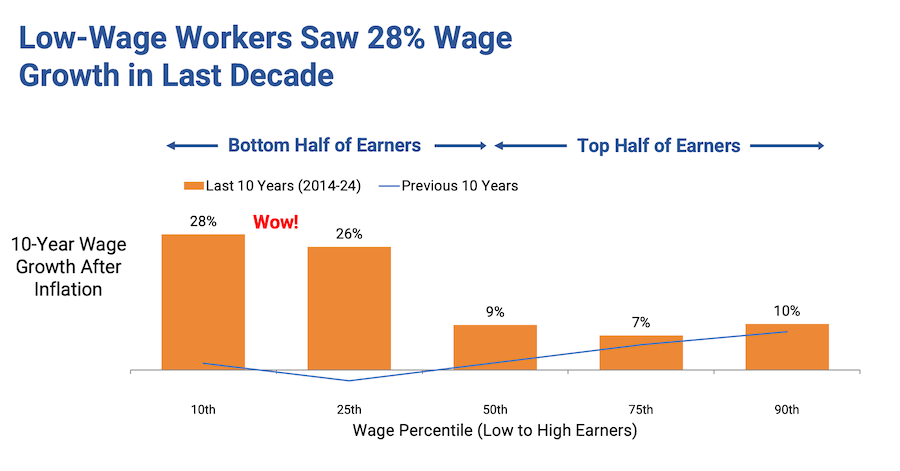
Why this dramatic improvement for low-wage workers? Economics 101 would point to supply-demand imbalances for low-wage occupations, such as higher job creation or a worker shortage. Minimum wage laws have also affected these numbers, as seven States and the District of Columbia have progressively increased their minimum to $15/hour or more.
Still, new job creation accompanies strong wage growth across many low-wage occupations in diverse industries: warehouse laborers, cooks/food prep, bartenders, security guards, delivery drivers, veterinary assistants, and hotel clerks.
Another way to look at this issue to compare each percentile’s wage level to the median wage (50th percentile). In the chart below, we see that the recession of 2020 did significant damage to earnings for high-earners but much less damage to low-earners. High-earners haven’t seen any growth above the median wage in 10 years, while low-earners have advanced 10 percentage points – a very significant “advance”.
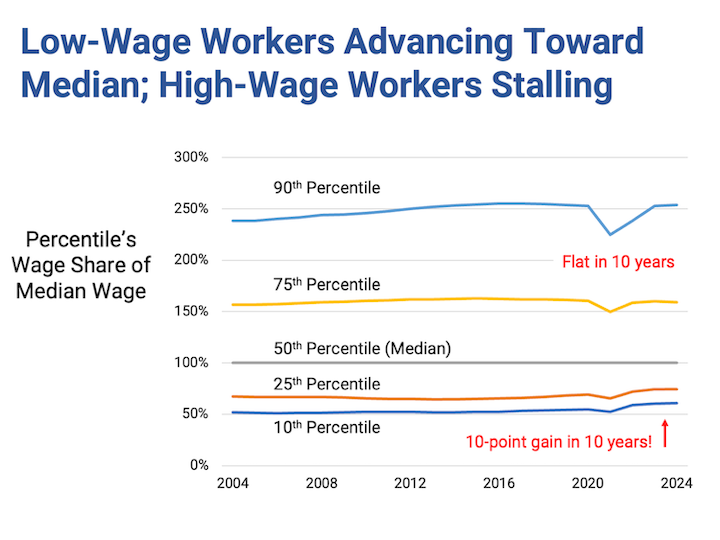
This data supports the view that low-wage (usually lower-educated) workers continue to have negotiating strength in the marketplace, particularly after the pandemic. And with AI automation approaching for high-wage, highly educated workers, the chart above could be the best way to monitor impacts.
“Thinking in Percentiles” might also help economic developers who seek to raise the overall wage levels in their communities:
- Could low-wage job attraction (distribution, assembly) help raise the wages of all low-wage workers through greater competition?
- Are high-wage jobs, often the most sought-after, at risk for wage compression due to AI?
- What workforce training programs can offer “career lattices” that move workers into higher paying jobs (percentiles)?
Data sources for this article: Headlight Data analysis; BLS (wages); Federal Reserve (PCE inflation)